
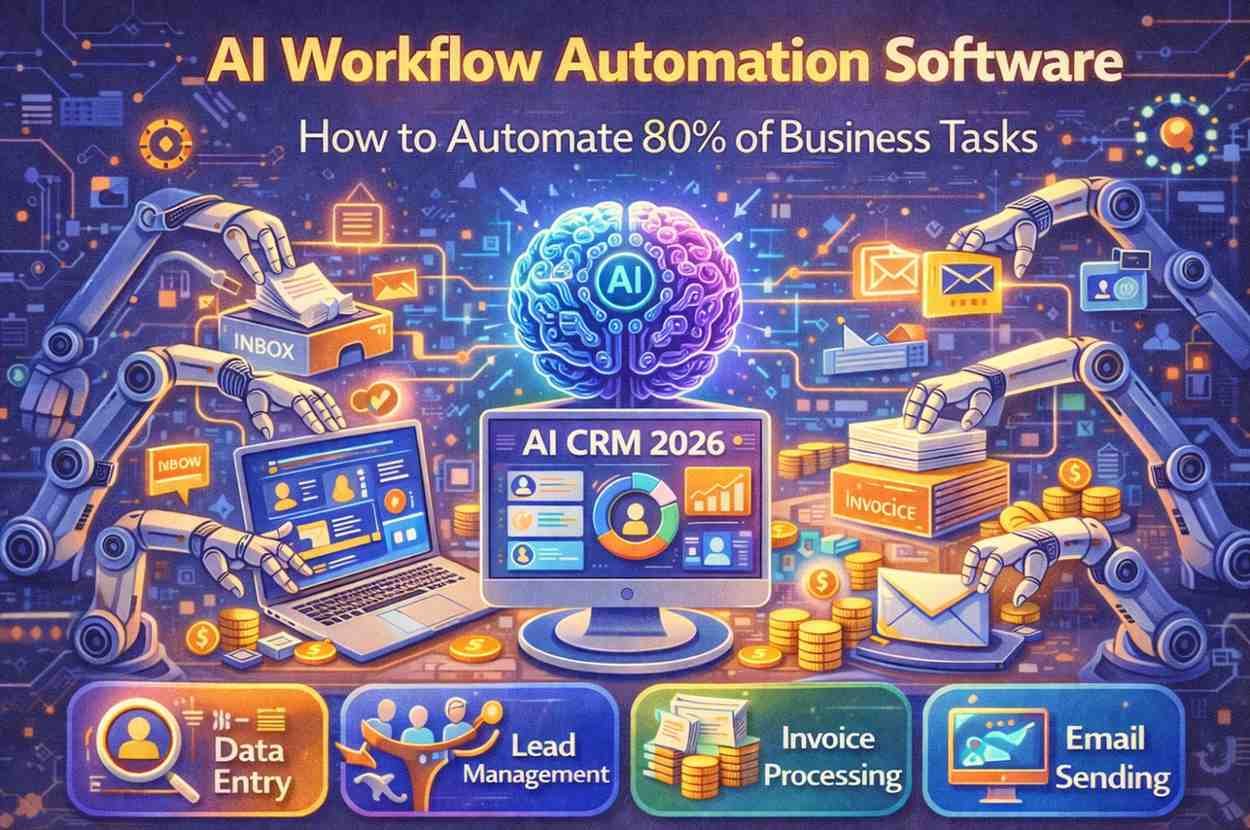
In today’s fast-paced digital economy, businesses are constantly looking for ways to improve productivity and reduce operational costs. Manual processes such as data entry, customer support responses, email management, and task coordination often consume valuable time and resources. As organizations scale, managing these repetitive activities becomes even more challenging.
This is where AI Workflow Automation Software plays a transformative role. By leveraging artificial intelligence and machine learning, businesses can automate routine tasks, streamline operations, and focus on strategic growth initiatives.
The demand for AI Workflow Automation Software has increased rapidly as companies aim to automate up to 80% of their business processes. From marketing automation and customer support to HR management and finance operations, AI-powered automation platforms can handle complex workflows with minimal human intervention.
By implementing Business Process Automation Tools, companies can reduce errors, improve efficiency, and significantly increase productivity.
What Is AI Workflow Automation Software?
AI Workflow Automation Software is a digital platform that uses artificial intelligence to automate business processes and workflows.
These platforms integrate with existing business systems to perform repetitive tasks automatically.
Key Functions of AI Workflow Automation Tools
- Automating repetitive tasks
- Managing business workflows
- Integrating multiple applications
- Analyzing data for decision-making
Unlike traditional automation tools, AI Business Process Automation Software can learn from data patterns and optimize workflows over time.
Why Businesses Are Adopting AI Workflow Automation
Businesses are adopting AI Workflow Automation Software because it offers significant operational advantages.
Increased Productivity
Automation reduces manual workloads and improves efficiency.
Cost Reduction
Automated processes reduce labor costs and operational expenses.
Faster Decision-Making
AI systems analyze data and provide actionable insights.
Improved Accuracy
Automation reduces human errors in repetitive tasks.
These benefits make AI Business Automation Software a powerful solution for modern organizations.
Step-by-Step Guide: How to Automate 80% of Business Tasks
1. Identify Repetitive Business Processes
The first step in automation is identifying tasks that occur repeatedly.
- Email responses
- Data entry
- Customer support inquiries
- Invoice processing
Automating these tasks significantly improves productivity.
2. Choose the Right AI Workflow Automation Software
Selecting the right platform is essential for successful automation.
- AI-powered workflow automation
- Integration with existing systems
- Customizable workflow management
3. Integrate Business Applications
Most automation platforms allow integration with popular business tools such as:
- CRM systems
- Email marketing platforms
- Accounting software
- Customer support tools
Integration enables seamless workflow automation across departments.
4. Automate Customer Communication
Customer communication is one of the easiest processes to automate.
- Chatbot responses
- Email follow-ups
- Appointment scheduling
Automated communication improves customer experience.
5. Implement AI Data Processing
Businesses generate large volumes of data daily.
AI automation tools can process data by:
- Extracting relevant information
- Generating reports
- Identifying trends
This improves decision-making efficiency.
6. Automate Marketing Campaigns
Marketing automation is one of the most common applications of AI Workflow Automation Software.
- Automated email marketing campaigns
- Social media scheduling
- Lead nurturing workflows
7. Monitor and Optimize Workflows
Automation should be continuously monitored and optimized.
AI analytics tools help businesses:
- Track workflow performance
- Identify inefficiencies
- Improve automation strategies
Popular AI Workflow Automation Software Platforms
| Software | Key Features | Best For |
|---|---|---|
| Zapier | App integrations, workflow automation | Small businesses |
| Make (Integromat) | Visual automation builder | Advanced automation |
| UiPath | AI robotic process automation | Enterprise automation |
| HubSpot Operations Hub | CRM automation, workflow management | Marketing teams |
| Microsoft Power Automate | Business workflow automation | Enterprise environments |
Key Features of the Best AI Workflow Automation Tools
- AI-Powered Task Automation – Automatically performs repetitive tasks.
- Multi-App Integration – Connects multiple software systems.
- Predictive Analytics – Analyzes data to predict future outcomes.
- Customizable Workflow Design – Businesses can design workflows tailored to their operations.
Benefits of AI Workflow Automation
- Increased operational efficiency
- Reduced operational costs
- Improved customer experience
- Business scalability
Common Mistakes to Avoid
- Automating poorly designed processes
- Ignoring employee training
- Over-automating customer interactions
Tips for Successfully Implementing AI Workflow Automation
- Start with simple workflows
- Monitor automation performance
- Combine AI with human oversight
- Continuously improve workflows
Conclusion
Implementing AI Workflow Automation Software is one of the most effective ways businesses can increase efficiency, reduce operational costs, and scale their operations in the digital age.
By automating repetitive processes such as data entry, customer communication, marketing campaigns, and workflow management, organizations can significantly improve productivity while allowing employees to focus on high-value strategic tasks.
When implemented correctly, AI Workflow Automation Software can help companies automate up to 80% of their business tasks, leading to improved operational efficiency, better customer experiences, and sustainable business growth.